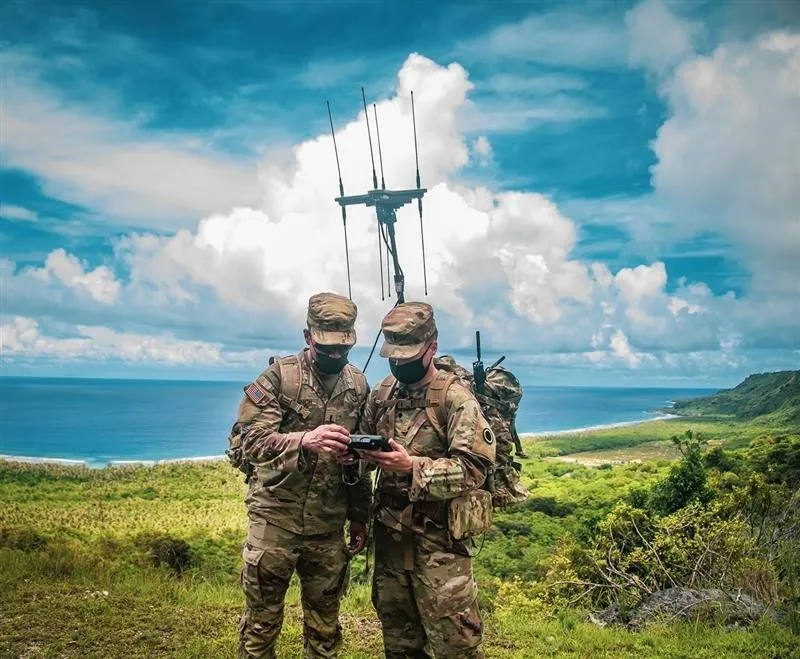
Army Turns to AI for Rapid RF Waveform Reprogramming at the Edge
In a groundbreaking effort to increase battlefield survivability and operational flexibility, the U.S. Army is developing an artificial intelligence (AI)-enabled tool capable of generating code to reprogram radio frequency (RF) waveforms directly in the field. This innovation stems from the Army Reprogramming Analysis Team (ARAT), under the Communications Electronics Command (CECOM), and is part of the broader “transformation in contact” initiative designed to reduce the time soldiers are vulnerable to electronic warfare (EW) threats.
Speed is Survival
Traditionally, altering RF waveforms for jamming or evasion has required weeks or months. However, in light of lessons learned from Russia’s ongoing war in Ukraine, the Army is pushing to cut that response time to hours, or even minutes. This AI tool would enable deployed soldiers to rapidly update their waveforms at the tactical edge, minimizing exposure to enemy EW systems.
Nicholaus Saacks, deputy to the commanding general at CECOM, underscored the importance of time:
“If there’s time where they’re vulnerable because of an EW threat, that’s time they can’t be doing their mission.”
How the Tool Works
Still in its prototyping phase, the AI-based solution merges two key technologies:
- A.I. Flow: A Microsoft Azure-powered system initially built to assist in tasks like contract writing.
- Simulation Modeling Framework: A tool capable of simulating threats and generating waveform code for devices like software-defined radios.
Together, these systems allow soldiers to issue spoken or typed prompts—such as “degrade system X using device Y”; and receive the appropriate RF waveform or jamming code in response.
“It would be much faster to simply say, ‘I need to degrade system X,’ and have the AI generate the correct waveform,” said Eric Bowes, ARAT’s program officer.
Operational Testing and Future Deployment
The tool’s initial testing occurred during the second phase of the Army’s RF Data Pilot, where soldiers successfully used the Simulation Modeling Framework to jam a digital mobile radio. Encouraged by this success, the team is now working toward integrating and refining the full AI-enhanced solution.
One major hurdle remains: the system must still receive an Authority to Operate (ATO), a mandatory security certification that can take months. However, the Army is accelerating development in partnership with multiple EW offices.
Broader Strategic Implications
This effort is a direct response to the evolving EW threat landscape and reflects a significant shift in U.S. military doctrine. By empowering soldiers to adapt quickly and autonomously, the Army aims to maintain superiority in contested electronic environments.
“It’s all about transformation in contact,” said Austin Fox, a CECOM spokesperson. “We’re perfecting as we progress.”
As the tool matures, it may become a standard component in the Army’s electronic warfare and communications toolkit, fundamentally changing how U.S. forces engage in RF-dominated battlespaces.