
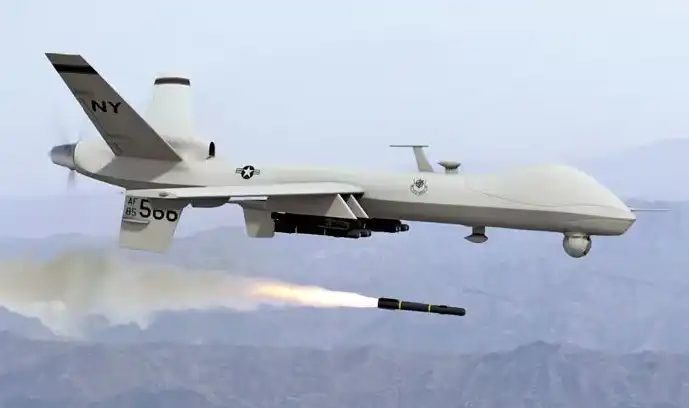
U.S. to Deploy MQ-9 Reaper Drones to South Korea for First Extended Mission
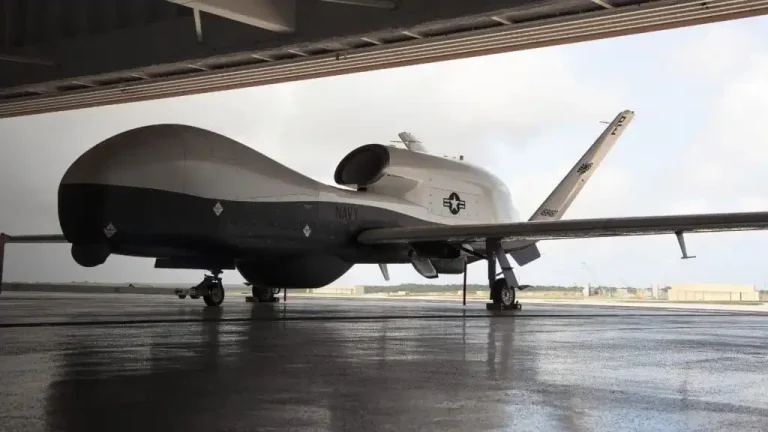
The United States Air Force is preparing to station MQ-9 Reaper drones in South Korea for a three-month rotational deployment beginning in September 2025, marking the first extended presence of the armed unmanned aerial vehicles (UAVs) on the Korean Peninsula.
The move, first reported by South Korea’s Chosun Daily, signals a deepening of U.S. surveillance and deterrence capabilities in East Asia amid growing tensions with China and North Korea.
MQ-9 Reaper to Operate from Gunsan Air Base
The drones are expected to operate from Gunsan (Kunsan) Air Base, home to the U.S. Seventh Air Force, situated on South Korea’s western coast along the Yellow Sea. While the number of deployed Reapers remains undisclosed, their operational reach could include Beijing, Shanghai, Hangzhou, and Qingdao, given the MQ-9’s extensive range and altitude capabilities.
A U.S. Air Force spokesperson, Maj. Laura Hayden, declined to confirm specific details of the report but emphasized that the U.S. remains focused on “readiness while sustaining and strengthening our alliance with [South Korea].”
South Korea’s Ministry of National Defense also refrained from verifying the deployment, citing that the Reapers are U.S. military assets.
Strategic Deterrence Against China and North Korea
Though the MQ-9 Reaper is equipped with precision-strike capabilities, including AGM-114 Hellfire missiles, GBU-12 Paveway II, and JDAMs, experts emphasize its role as primarily a surveillance and reconnaissance platform.
“The MQ-9 has strike capabilities, but it is fundamentally a surveillance platform,” said Yang Uk, a research fellow at the Asian Institute for Policy Studies, suggesting that the deployment is a strategic message to Beijing and Pyongyang rather than a purely tactical move.
Previous Activity and Capabilities in Korea
The MQ-9 has previously operated in South Korean training exercises, but never for a deployment of this length. In April 2024, it conducted a live-fire test on the peninsula, successfully releasing GBU-12 precision bombs. It also took part in Exercise Freedom Flag 25-1 in May, where the U.S. Air Force and Marine Corps collaborated on enhancing drone readiness in expeditionary scenarios.
Capable of 27+ hours of endurance, flying at altitudes of up to 50,000 feet (15,240 meters), and with a range of approximately 1,150 miles (1,850 km), the MQ-9 Reaper offers the U.S. military broad regional reach, including surveillance over disputed zones in the South and East China Seas.
Timing: Reaper Replaces the A-10 Thunderbolt II
The planned Reaper deployment comes as the U.S. prepares to retire its A-10 Thunderbolt II attack jets from the region, part of a broader modernization strategy involving the introduction of fourth- and fifth-generation fighters like the F-35.
The timing highlights a shift in U.S. military posture from close-range ground attack platforms to multi-role, high-endurance unmanned systems capable of regional surveillance and rapid strike if necessary.
Conclusion
If confirmed, the MQ-9 Reaper’s upcoming deployment to South Korea will mark a historic shift in U.S. drone operations in the region. It reflects not only an effort to reinforce joint military readiness with Seoul but also serves as a calculated counterbalance to Chinese and North Korean military developments. With growing threats in East Asia, the MQ-9’s extended mission signals Washington’s intent to maintain aerial dominance and strategic awareness in a rapidly evolving security landscape.


One Comment